

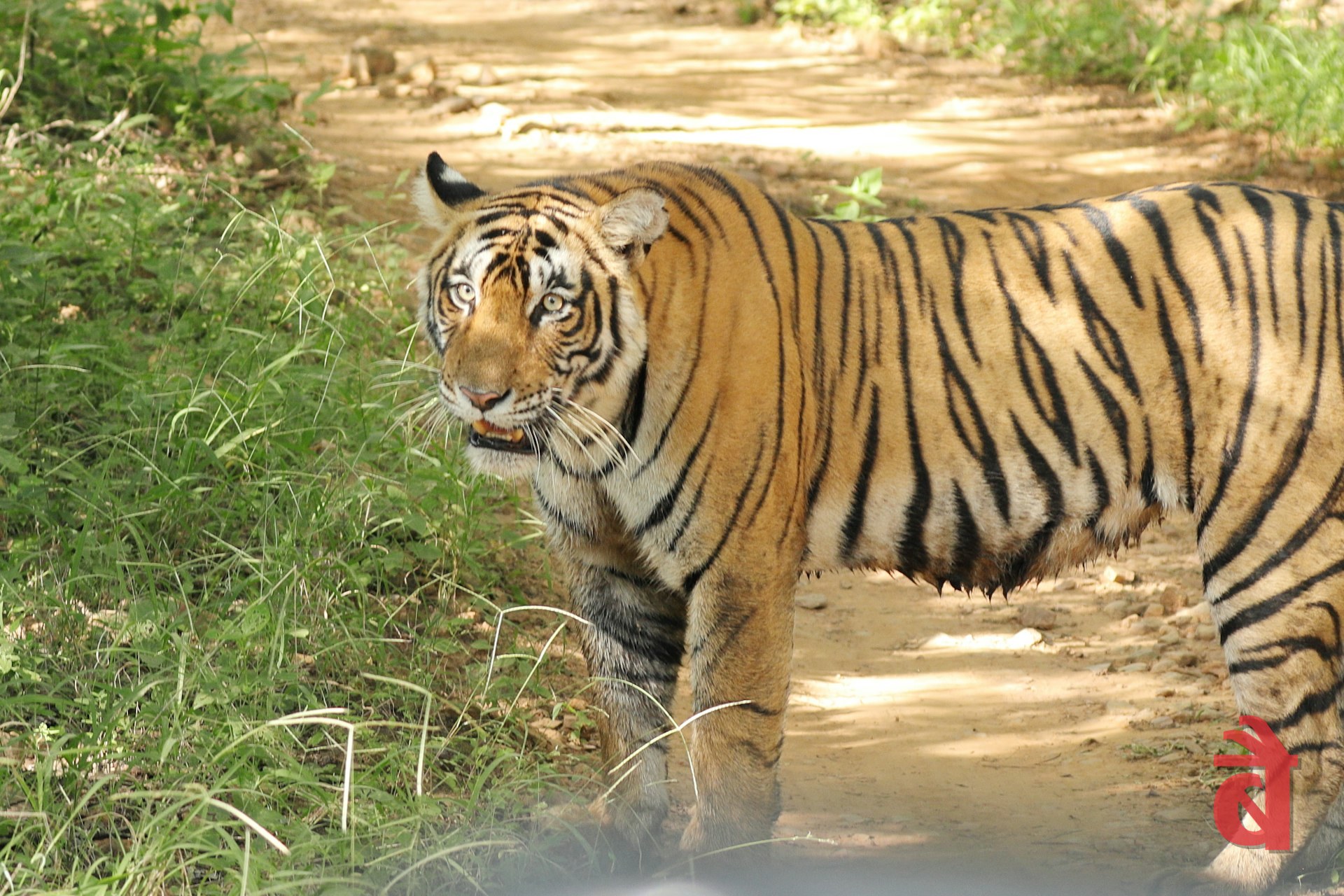
Here's the calendar nobody tells you about: Ranthambore's core safari zones — the ones with the actual tigers — shut for monsoon on July 1. They reopen in October. So if you've been telling yourself maybe this year, you've got about six weeks.
The plot twist: May, the month everyone tries to avoid because it's 44°C, is when you're statistically most likely to see a tiger. The forests thin out. Water holes shrink to a handful of reliable spots. Tigers come to drink. You sit in a Gypsy with a wet bandana around your neck and watch a 200 kg cat walk fifteen feet from you.
From Jaipur, the whole thing is a 160 km drive. Here's how to do it without the rookie mistakes.
The route at a glance
| Distance | ~160 km via NH52 + NH148D |
| Drive time | 3 hr to 3 hr 30 min |
| Toll | ~₹180 one way (FASTag) |
| Where you actually stop | Sawai Madhopur (the park gates are 10 km out of town) |
| Best start time | 5:30 AM if you have the same-day morning safari, else 8 AM |
Why May is paradoxically the best month for tigers
Counter-intuitive but true: park guides will tell you May and June are when sighting probability peaks. A few reasons:
- Foliage thins. Winter's lush undergrowth dries up. A tiger that was invisible in January is now framed cleanly against bare branches.
- Water holes consolidate. Tigers stop wandering and start orbiting 4–5 reliable water sources. Guides know exactly which ones.
- Heat-stress patterns are predictable. Tigers come to water in the late morning and again at sunset. Both safari slots overlap with those windows.
The trade-off: it'll be 44°C in your open Gypsy. Bring a wet cotton scarf, two litres of water per person, and a hat that can survive the wind. You'll sweat through everything; you won't care.
The safari booking is harder than the drive
Most first-timers underestimate this. Ranthambore safaris are booked through the Rajasthan Forest Department portal (rajasthanwildlife.in) and they go live 90 days ahead. For peak weekends, the good zones sell out in hours.
Two practical tips:
- Book online, not at the gate. Online bookings via the Forest Dept portal get the better Gypsy slots and lock in your zone. Walk-up tatkal slots exist but you'll get whatever zone is left — often the dud ones.
- Gypsy beats Canter. The 6-seater 4WD Gypsy (~₹2,000–2,500/person) gives you visibility, mobility, and the chance to actually stop where the tracks are. The 20-seater Canter (~₹1,200/person) is cheaper but you're on a fixed line and packed shoulder-to-shoulder. Splurge on the Gypsy.
Two safari slots per day: 6:00 AM (the better one for sightings, painful at 4:30 AM wake-up) and 2:30 PM (heat is brutal, sightings still good). Plan for at least two safaris — one slot is just bad luck.
The zones, ranked by ‘will I actually see a tiger’
Ranthambore is split into 10 zones. Zones 1–5 are the historic core. Zones 6–10 are buffer zones that opened later. People obsess over zones 1–5 but locals will tell you the buffer zones can be just as good — sometimes better in summer.
- Zone 3 & 4 — the legendary ones. Padam Talao, Rajbagh, the postcard backdrops. Sightings are good. Bookings are vicious.
- Zone 6 (Kundal) — the local secret. Open landscape, fewer Gypsies, water holes that get steady traffic in summer. Often available when the headline zones are sold out.
- Zone 10 — excellent for peripheral sightings, less crowded. Worth pairing with a Zone 3/4 booking on different days.
- Zone 2 & 5 — hit or miss. Don't say no if it's all that's left, but don't make it your only safari.
- Zone 1 & 7–9 — generally weaker for tigers. Good for leopards, sloth bear, the broader park experience.
Two stops on the drive worth making
1. Tonk for breakfast (~100 km mark)
Couple of solid dhabas right on the bypass. Aloo paratha, kachori, lassi. Twenty-minute stop. Fuel pumps both sides of the highway — obvious top-up point if you skipped Jaipur outskirts.
2. The historic Ranthambore Fort
Most people go for the tigers and skip the fort. Mistake. The 10th-century fort sits inside the park, you can drive partway up, and the views over the lakes where tigers actually live are spectacular. Two hours on a non-safari afternoon. Free entry.
‘Ranthambore’ isn't where you stay
Common confusion: there is no town called Ranthambore. You stay in Sawai Madhopur, the town that grew around the railway station 10 km from the park gates. Resorts range from ₹1,800/night homestays to the ₹1.4 lakh/night Aman-i-Khas. Sweet spot for a first self-drive trip: a mid-tier resort along Ranthambore Road for ₹3,500–6,000/night, breakfast included.
Pre-drive checklist
- Print or download your safari permit. Phones die in 44°C heat — have a paper backup at the gate.
- Loose, light-coloured cotton clothing. Avoid black, navy, bright red — stand out too much in the forest.
- Camera with at least a 200mm lens if you can manage it. Phone zoom won't do justice when a tiger is 30 m away.
- Wet wipes & a small towel. The Gypsy ride back is dust-soaked.
- Water: 2 L per person per safari. The forest department officially asks you not to litter, so carry the empties back.
- FASTag, ₹3,000 cash, offline maps for the last 30 km (Sawai Madhopur outskirts have signal gaps).
4-day cost math (couple)
| Self-drive SUV @ ₹3,000/day × 4 | ₹12,000 |
| Fuel (~360 km round trip + local) | ~₹2,800 |
| Tolls + parking | ~₹500 |
| Resort (3 nights, mid-tier with breakfast) | ₹15,000 |
| 2 Gypsy safaris (couple) | ~₹9,000 |
| Total trip cost | ~₹39,300 for 4 days |
A packaged tour from Jaipur with hotel cab quotes ₹48,000–55,000 for the same itinerary — and you're on the driver's schedule. Self-drive means you skip the Saturday nap and go visit the fort instead.
FAQ
When do the core zones close exactly?
Zones 1–5 close July 1 for monsoon and reopen October 1. Buffer zones 6–10 stay open year-round but the experience is reduced during heavy rain. May and June 2026 is your last good window.
Can I do it as a day trip from Jaipur?
Technically. Leave at 3 AM, do the morning safari, drive back same day. We don't recommend it — one safari slot is high-variance for tigers. Two-night minimum gives you four safari attempts.
What if I don't see a tiger?
Roughly 30–40% of May safaris see no tiger. The park is still incredible — sambar, langurs, marsh crocodiles, peacock everywhere. Two safaris gives you a 60–70% chance of at least one tiger encounter.
Do I need a 4WD?
No. The Jaipur–Ranthambore highway is fully paved. Inside the park you'll switch to the Gypsy anyway. Any sedan, hatchback, or compact SUV does the drive comfortably.
Ready to book?
Pick up a self-drive car from BaeCars Jaipur. Petrol and diesel options, unlimited-km outstation packages, and a deposit refunded the same day you return.
Book your safari permit first — the car can wait, the safari window can't.